
Tattoo mini: A Complete Guide to Small, Meaningful Tattoos
26/09/2026
Mini Tattoo for Girl: Elegant Ideas, Placement & Care
26/09/2026Tattoo Old School Mini: Small Designs, Big Character
Small tattoos can carry an unmistakable visual identity. Few styles demonstrate this better than the tattoo old school mini, which takes the bold outlines, limited color palettes, and iconic imagery of traditional American tattooing and adapts them to a smaller scale. A tiny swallow, rose, dagger, heart, anchor, or panther can still feel unmistakably traditional when the proportions and linework are handled correctly.
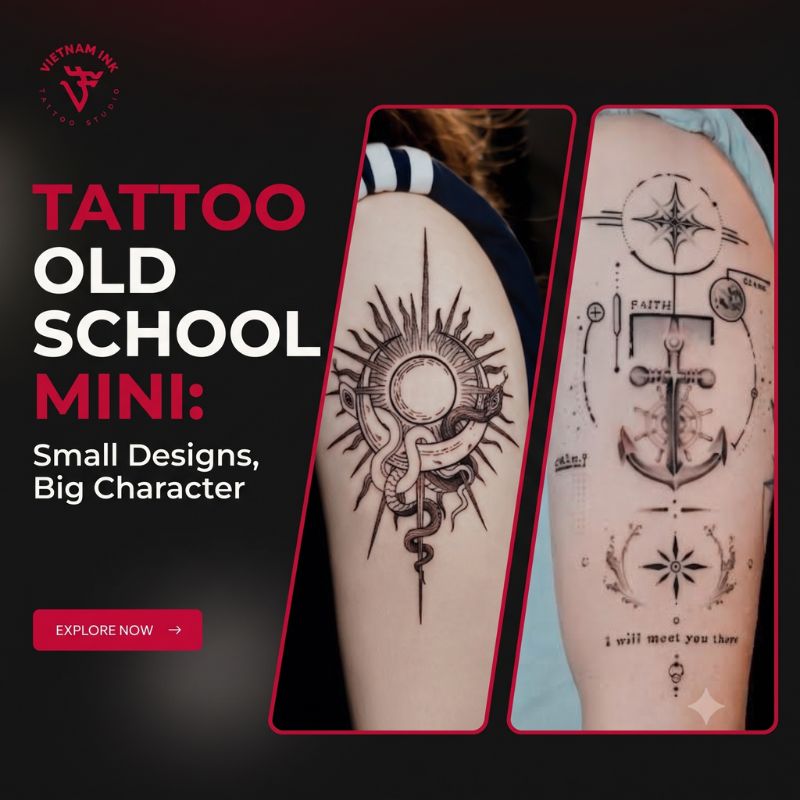
What Defines a tattoo old school mini?
But making a traditional tattoo smaller is not simply a matter of reducing the artwork. Fine details become more vulnerable to visual merging as the tattoo ages, while placement, needle selection, line weight, and spacing become increasingly important. This guide explains how miniature old school tattoos are designed, tattooed, healed, and maintained so you can choose a piece that remains legible and visually strong for years.
What Defines a tattoo old school mini?
Old school tattooing, commonly associated with American Traditional, is recognized for its strong visual structure. Classic designs typically use bold black outlines, simplified forms, solid color fields, and recognizable symbolism. Traditional motifs were designed to remain readable on the skin rather than depend on excessive detail.
A miniature version follows the same principles while adapting them to limited space. The goal is not to reproduce every detail of a larger traditional flash design. Instead, an experienced artist simplifies the composition so its essential silhouette and identifying features remain clear.
Common miniature old school subjects include:
- Roses and other traditional flowers
- Hearts and sacred-heart variations
- Swallows and small birds
- Daggers and swords
- Anchors and nautical imagery
- Snakes
- Lucky horseshoes
- Stars
- Traditional lettering
- Small panthers or animal heads
The strongest designs usually have one dominant visual idea. When too many elements are compressed into a small area, the tattoo can lose the clarity that makes traditional tattooing distinctive.
Why Small Traditional Tattoos Require Careful Design
A tattoo’s appearance changes as the skin heals and ages. Ink settles within the dermis, while the skin continues to experience normal biological changes and environmental exposure. Very small spaces therefore leave less room for error.
This is particularly important with traditional work because bold outlines are part of the style’s visual language. An artist may deliberately remove tiny decorative elements, enlarge an important feature, or simplify internal shading to preserve readability.
For example, a small traditional rose does not necessarily need numerous individual petals. A strong outer contour, a few strategically placed internal lines, and controlled areas of solid color can communicate the flower more effectively.
This is where professional tattoo design differs from simply shrinking an image on a screen.
Designing a tattoo old school mini That Ages Well
Before tattooing, the artist should evaluate the design against its intended dimensions and placement. A design that looks excellent at four inches may become difficult to read at one inch.
Choosing the Right Level of Detail
Miniature traditional tattoos benefit from visual hierarchy. The primary contour should immediately establish the subject, while secondary lines provide enough information to reinforce the image without overcrowding it.
Artists may adjust:
- Line spacing
- Internal details
- Color blocks
- Negative space
- Overall proportions
- Decorative elements
Negative space is particularly valuable. Skin left intentionally open between shapes helps prevent adjacent areas from visually blending together as the tattoo matures.
Selecting Needle Configurations
Needle configuration depends on the design, skin, and artist’s technique. Traditional tattooing often relies on round liners for defined outlines and magnums or other configurations for controlled color packing and shading.
For a small piece, however, the artist must balance saturation with trauma to the skin. More passes do not automatically produce a better tattoo. Experienced artists work within the skin’s limits, depositing pigment efficiently while avoiding unnecessary overworking.
The exact configuration should therefore be selected by the tattooer rather than treated as a universal formula.
Best Placement for a Miniature Old School Tattoo
Placement affects both aesthetics and longevity. Small traditional designs can work across many areas, but the artist should consider skin movement, friction, sun exposure, and the natural shape of the body.
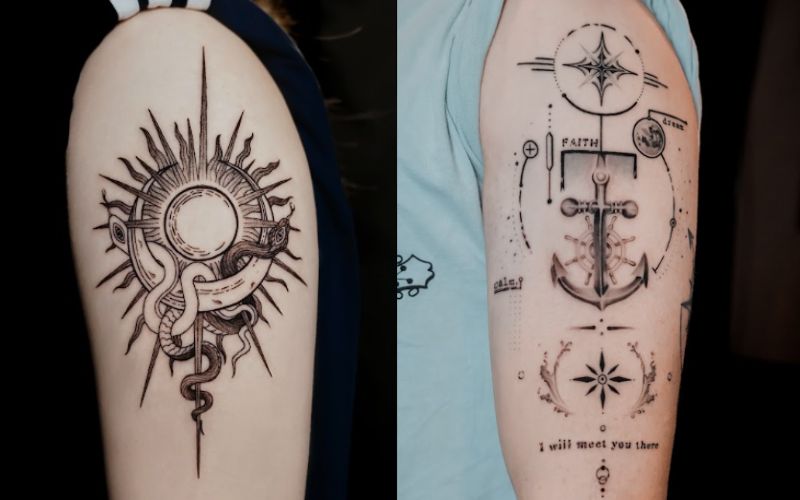
Best Placement for a Miniature Old School Tattoo
The forearm, upper arm, calf, shoulder, and outer thigh can provide relatively straightforward surfaces for small designs. Hands, fingers, feet, and areas exposed to frequent friction can present additional maintenance challenges.
Consider how the tattoo will look from normal viewing distance rather than only when examining it closely. A design should have enough visual weight to remain recognizable without requiring the viewer to stand directly beside it.
Placement also matters compositionally. A small dagger can follow the natural vertical direction of the forearm, while a heart or flower may work better with a compact, centered orientation.
The Tattooing Process: From Skin Prep to Finished Ink
Professional tattooing begins before the needle touches the skin. The artist should assess the skin condition, confirm the stencil placement, and prepare the area using appropriate hygiene procedures.
A professional setup should include appropriate single-use consumables, properly sterilized equipment where applicable, fresh gloves, safe handling of needles and ink, and a clean working environment. Reputable studios also follow procedures designed to prevent cross-contamination between the client, artist, equipment, and work surfaces.
After stencil placement, the artist establishes the major contours first. In traditional-inspired work, clean and confident linework provides the structural foundation of the tattoo.
Color packing and shading follow according to the design. Because small tattoos have limited surface area, pigment placement needs to be deliberate. Overworking the skin can contribute to unnecessary irritation and compromise the healing process.
At VietnamInk, the consultation stage is equally important because the artist can evaluate whether a requested reference will actually translate well at the desired size and body location.
Healing and Aftercare for Small Traditional Tattoos
A miniature tattoo still creates a controlled skin injury and needs appropriate aftercare. The first few days are especially important because the tattooed area may be sensitive, slightly swollen, or produce small amounts of clear fluid.
Follow the specific instructions provided by your tattoo artist, particularly regarding the type of dressing used. Once the dressing is removed according to those instructions, keep the area clean and avoid unnecessary touching.
General aftercare principles include:
- Wash gently with clean hands and a mild, fragrance-free cleanser when appropriate.
- Pat the area dry rather than rubbing it.
- Apply only the recommended amount of aftercare product.
- Avoid soaking the tattoo during early healing.
- Do not pick or scratch peeling skin.
- Limit unnecessary friction against the tattoo.
- Protect healed tattooed skin from excessive UV exposure.
Healing timelines vary according to the individual, tattoo size, placement, technique, and skin response. The visible surface may appear improved before the deeper healing process is fully complete, so patience is important.
If unusual symptoms develop or you are concerned about how the tattoo is healing, contact a qualified healthcare professional rather than attempting to diagnose the issue yourself.
How to Keep a Mini Old School Tattoo Looking Strong
Long-term tattoo maintenance is largely about protecting the skin in which the pigment exists. Sun exposure is one of the most significant environmental factors affecting tattoo appearance over time.
Once the tattoo is fully healed, broad-spectrum sunscreen can help reduce UV-related skin damage. Keeping the surrounding skin moisturized can also improve its appearance, although moisturizer cannot prevent normal tattoo aging.
Weight fluctuations, aging, and changes in skin texture can naturally alter the appearance of any tattoo. These changes are normal and do not necessarily mean the tattoo was poorly executed.
If an old tattoo eventually becomes less defined, an experienced artist can assess whether it would benefit from a touch-up. The appropriate solution depends on the original linework, pigment saturation, skin condition, and how much the design has changed over time.
Choosing an Artist for Your Mini Traditional Tattoo
Portfolio quality should be one of the first things you examine when selecting an artist. Look for healed work when available, not only freshly completed tattoos. Fresh ink can appear exceptionally crisp before the skin has completed its healing process.
Pay attention to:
- Consistency of line weight
- Clean curves and contours
- Solid color saturation
- Appropriate use of negative space
- Proportion at small sizes
- Healed results
- Studio hygiene and professional practices
Communication is equally important. A good consultation should allow you to discuss the reference, desired size, placement, symbolism, and any concerns about longevity.
VietnamInk approaches tattooing as a combination of design, technique, skin knowledge, and individual expression. Consulting an experienced artist can help transform a favorite traditional motif into a composition that is appropriate for your anatomy rather than simply copying an image from a reference sheet.
Final Thoughts on Choosing a tattoo old school mini
A tattoo old school mini may be small in physical size, but successful execution requires considerable design discipline. Strong silhouettes, controlled linework, purposeful negative space, appropriate color packing, and thoughtful placement all contribute to how the tattoo will look after healing and throughout its life.
The best miniature traditional tattoos do not attempt to squeeze a large illustration into a tiny space. They identify what makes the design recognizable and allow those essential elements to lead the composition.
Before booking, consider the artwork’s size, placement, artist’s portfolio, hygiene standards, and long-term readability. If you are exploring traditional tattoo ideas, VietnamInk can also be a useful place to study different styles and discuss custom concepts with experienced artists. A well-planned small tattoo can remain simple, distinctive, and meaningful without sacrificing the craftsmanship that gives traditional tattooing its character.