Mini Tattoo for Girl: Elegant Ideas, Placement & Care
26/09/2026Mini Tattoo for Boy: Meaningful Ideas, Placement & Care Guide
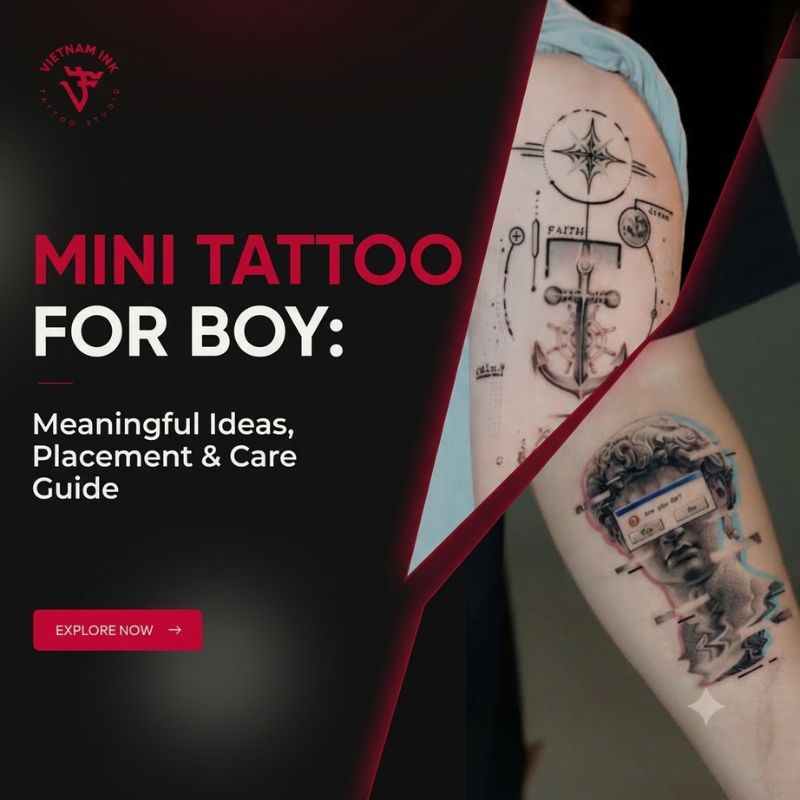
A small tattoo can be understated without losing personality. Whether it represents a personal milestone, a favorite symbol, or simply a clean aesthetic, a mini tattoo for boy can make a strong visual statement when its proportions and placement are carefully considered. Small-scale tattooing, however, is not simply about taking a large design and shrinking it. Fine details can merge, lines can visually soften as the tattoo ages, and certain body locations can make a tiny design harder to maintain.
Mini tattoo for boy
For that reason, choosing a small tattoo should involve more than finding an attractive reference image. An experienced tattoo artist considers skin anatomy, line weight, negative space, needle configuration, pigment saturation, and long-term readability. This guide explores popular design directions, suitable placements, professional tattooing techniques, healing, aftercare, and practical considerations for creating a small tattoo that remains distinctive over time.
What Makes a Great Small Tattoo?
The strongest small tattoos usually have one clear visual idea. At a reduced scale, unnecessary details can make the artwork appear crowded, so experienced artists often simplify the design before transferring it to skin.
Popular concepts include:
- Small animals such as wolves, cats, birds, or snakes
- Mountains, waves, and other nature-inspired imagery
- Stars, moons, and celestial symbols
- Minimalist geometric shapes
- Small swords, anchors, or traditional motifs
- Initials, numbers, or short words
- Personal symbols connected to family, travel, or important memories
The goal is visual clarity rather than maximum detail. A good tattoo should still communicate its primary shape when viewed from a normal distance.
For example, a small mountain tattoo may only need a strong outer silhouette and a few carefully positioned interior lines. Adding every ridge and texture from a reference photograph could make the design unnecessarily dense.
Popular Styles for a mini tattoo for boy
Small tattoos are not limited to one aesthetic. The same subject can be interpreted through different tattoo styles depending on the wearer’s personality and the artist’s strengths.
Minimalist and Fine-Line Designs
Fine-line tattooing uses delicate, controlled strokes and is often associated with small symbols, botanical subjects, coordinates, geometric artwork, and understated illustrations.
The important distinction is that fine-line does not mean infinitely thin. Tattoo ink is deposited into the dermis, and healed lines naturally soften to some degree. An experienced artist therefore needs enough separation between elements to allow the tattoo to age gracefully.
Very small lettering deserves particular caution. Fonts that look crisp on a phone screen may become difficult to read when reduced to skin-friendly dimensions.
Blackwork and Graphic Tattoos
Blackwork relies heavily on black pigment, strong shapes, negative space, and contrast. It can be particularly effective for small designs because a simple silhouette can remain visually powerful without requiring multiple colors.
A miniature geometric symbol, animal silhouette, or abstract composition can look exceptionally clean when the artist balances solid black areas with sufficient skin breaks.
Traditional-Inspired Designs
Traditional tattooing provides another strong direction for smaller pieces. Classic motifs such as anchors, daggers, roses, hearts, stars, and swallows can be simplified while retaining their recognizable visual language.
Bold outlines are particularly important in this style. However, the artist still needs to consider scale carefully. Compressing too many traditional details into a tiny design can reduce clarity after healing.
Choosing the Right Placement
Body placement affects both the appearance and maintenance of a small tattoo. Skin stretches, folds, moves, and experiences different levels of friction depending on the location.
The forearm is a practical option because it provides a relatively stable surface and allows the tattoo to be viewed easily. The upper arm, shoulder, calf, and outer thigh can also provide suitable areas for compact designs.
Areas such as the fingers, hands, and feet require additional consideration. They experience frequent movement, washing, friction, and environmental exposure, which can contribute to faster changes in tattoo appearance.
Placement should also complement the geometry of the artwork. A narrow vertical design may naturally follow the forearm, while a compact circular symbol can work well on the upper arm or shoulder.
Before finalizing the placement, an artist should assess the skin in its natural position rather than relying exclusively on a flat digital mockup.
Designing a mini tattoo for boy That Ages Well
Tattoo longevity begins with design decisions made before the first needle pass. A small tattoo needs sufficient breathing room between lines, shapes, and areas of shading.
Line Weight and Negative Space
Line weight should be appropriate for the size and location of the tattoo. If several lines are placed too close together, natural pigment diffusion and changes in the skin can make them appear visually compressed over time.
Negative space is therefore an important design tool. It gives separate elements room to remain distinguishable rather than allowing the entire image to become a dense block.
An experienced artist may recommend increasing the tattoo’s size slightly if the original concept contains too much detail. This is usually a technical adjustment intended to preserve the character of the design rather than an unnecessary enlargement.
Color and Pigment Saturation
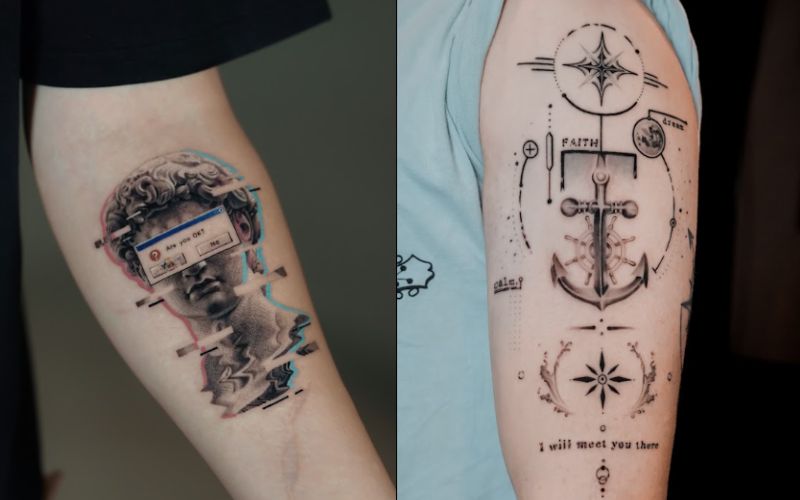
Color can add depth to a small tattoo, but every additional color creates another visual element that must work within limited space. Some miniature designs are stronger when built around blackwork or a restrained palette.
Color and Pigment Saturation
For colored tattoos, proper saturation is important, but excessive passes can unnecessarily irritate the skin. Professional tattooing is always a balance between depositing pigment effectively and respecting the skin’s condition.
What Happens During a Professional Tattoo Session?
A professional tattoo appointment begins with consultation and preparation rather than immediately picking up a machine.
The artist should review the artwork, confirm its dimensions and placement, and assess the skin. The area is cleaned and prepared according to appropriate studio hygiene procedures before the stencil is positioned.
Professional tattoo environments should use practices designed to prevent cross-contamination. These may include fresh gloves, single-use needles or cartridges, appropriate barrier protection, safe pigment handling, and properly sterilized reusable equipment where applicable.
During the tattoo itself, needle selection depends on the artwork, skin, and artist’s technique. Round liners are commonly used for controlled linework, while other needle groupings may be chosen for shading or color packing.
There is no universal needle configuration for every small tattoo. A skilled artist selects the setup according to the specific design rather than treating needle size as a marketing feature.
At VietnamInk, this technical assessment is part of creating a personalized tattoo experience where the design is adapted to the individual rather than copied mechanically from a reference image.
Healing and Aftercare
Even a tiny tattoo is still a controlled injury to the skin, so proper aftercare is essential. Immediately after the appointment, the tattoo may appear particularly saturated and sharp. Mild redness or tenderness can also occur as the skin responds to the procedure.
Follow your artist’s specific instructions because aftercare can vary depending on the dressing system and tattooing technique.
General principles include:
- Clean the tattoo gently with clean hands when instructed.
- Use a mild, fragrance-free cleanser if recommended.
- Pat the area dry instead of rubbing it.
- Apply aftercare products according to professional instructions.
- Avoid picking, scratching, or peeling the tattoo.
- Avoid prolonged soaking during early healing.
- Minimize unnecessary friction against the area.
- Keep the healing tattoo away from excessive sun exposure.
The tattoo’s appearance can change during healing. Peeling, dryness, temporary dullness, and changes in surface texture can occur as the epidermis recovers.
If you experience unusual or concerning symptoms, seek advice from an appropriate healthcare professional rather than attempting to diagnose or treat a potential complication yourself.
How to Make a Small Tattoo Personal
A small tattoo does not need an elaborate design to carry meaning. In many cases, its simplicity is precisely what makes it powerful.
Think about the idea behind the tattoo before deciding on the image. A mountain might represent a personal challenge, while a compass could symbolize direction or a meaningful journey. A small animal could reflect a personal connection rather than simply being chosen because it looks attractive.
Sharing that context with your tattoo artist can lead to a more thoughtful design. Instead of asking for an exact copy of a reference, explain what the image represents and let the artist explore ways to translate that meaning into an appropriate tattoo composition.
This collaborative approach is particularly useful when working at miniature scale because the artist can identify which elements are essential and which can be removed.
Long-Term Maintenance and Touch-Ups
A professionally executed tattoo still changes naturally with time. Skin aging, UV exposure, friction, and individual biology all influence how tattoo pigment looks years after the appointment.
Once the tattoo has fully healed, protecting it from excessive UV exposure is one of the simplest ways to support long-term appearance. Broad-spectrum sunscreen can help protect the skin from UV damage when used appropriately.
Healthy skin also provides a better visual foundation for tattoo pigment. Moisturizer can improve the appearance and feel of the skin, although it cannot stop normal tattoo aging.
Some tattoos eventually benefit from a touch-up. This should be assessed individually. An experienced artist can determine whether faded pigment, softened lines, or changes in the skin justify additional work.
Final Thoughts on Choosing a mini tattoo for boy
A mini tattoo for boy can be simple, masculine, artistic, symbolic, or completely individual. What matters most is not fitting as much detail as possible into a small area, but creating a composition that works with the skin and remains visually coherent after healing.
Consider the tattoo’s silhouette, line spacing, placement, color strategy, and long-term maintenance before committing to the final design. Choose an experienced artist who understands how small-scale artwork behaves on real skin and works within professional hygiene standards.
VietnamInk approaches tattooing through the combination of design, technical craftsmanship, skin knowledge, and personalized consultation. If you are exploring ideas for a small tattoo, studying different styles and discussing your concept with an experienced artist can help you arrive at a design that feels natural today and remains meaningful for years to come.